 Created in 2007 by the Pennsylvania Office of Child Development and Early Learning (OCDEL), The Pennsylvania Key implements the work and supports the policies developed and managed by OCDEL. Learn More. >
Created in 2007 by the Pennsylvania Office of Child Development and Early Learning (OCDEL), The Pennsylvania Key implements the work and supports the policies developed and managed by OCDEL. Learn More. >
Created in 2007 by the Pennsylvania Office of Child Development and Early Learning (OCDEL), The Pennsylvania Key implements the work and supports the policies developed and managed by OCDEL. Learn More. >The URL to access Provider Self-Service has recently changed. If you previously bookmarked this site, update your bookmarks to the new address to ensure continued access.
New URL: pelican.dhs.pa.gov/provider
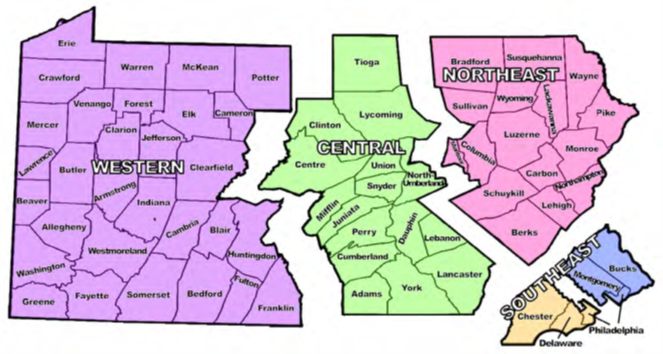
The Pennsylvania Office of Child Development and Early Learning (OCDEL) has many specialized community partners doing essential work with providers throughout the Commonwealth. It can be easy for providers to direct their questions regarding certification and licensing to these partners. However, when needing clarification for licensing issues, please reach out to your regional OCDEL office. Staff from the Bureau of Certification Services is available to answer your calls and provide information directly. This is the best way to ensure the information you receive is most accurate.
Fall has segued into cooler and shorter days which require a change in the child care provided. Outdoor play is integral to a child’s growth (physically, socially and mentally) but cooler days require outdoor play to be both fun and safe for all children. During cooler and adverse weather, providers should ensure that all children wear appropriate clothing that is safe for play in outdoor areas. To help prevent slips and falls, walkways must be cleared and maintained during inclement weather. 55. Pa Code §§ 3270.64, 3280.64, and 3290.62 requires that outside walkways shall be free from ice, snow, leaves, equipment, and other hazards.
According to 55 Pa Code §§ 3270.114, 3280.114, and 3290.114 relating to outdoor activity, weather permitting, children shall be taken outdoors daily.
2025 has been a busy year for the Bureau of Certification Services. In 2025, the Bureau issued several announcements, podcasts, and vodcasts to address questions, provide information, and clarify regulations. This article provides a brief description of the announcements and podcasts with a link to locate in case you missed them when they originally were released.
A Tiered LIS is an LIS that included a directed Plan of Correction requiring more than one step to come into compliance for one area of regulatory non-compliance. The Tiered Inspection Summary video will walk you through the process of completing your Tiered LIS. Please reference the Tiered POC Tip Sheet for Providers PDF as an additional resource.
In this video, you will review the regulatory requirements surrounding water activity as outlined under 55 Pa. Code §§ 3270.115, 3280.115, and 3290.115. Although, this vodcast does not satisfy the requirements for water safety instruction outlined in 55 Pa. Code §§ 3270.115(a)(8), 3280.115(a)(8), and 3290.115(a)(8), it is beneficial for providers to review each year as they prepare to partake in water activities with their children.
The PA Health Alert Network (PA HAN) is a communication network among state and local public health agencies, health care providers, hospitals, and emergency management officials. The information provided on the PA-HAN website is based upon recommendations from the Centers for Disease Control and Prevention and other health organizations. The general public and settings (i.e., child care, K-12 schools, non-healthcare congregate, and correctional/ detention facilities) impacted by the recommendations should read the PA HANs to learn appropriate prevention, control, and treatment steps. Sign up to receive PA-HANs at ondemand.mir3.com/han-pa-gov/login.
The U.S. Consumer Product Safety Commission (CPSC) is an independent federal agency that protects consumers from product-related hazards through standards, bans, recalls, and education, focusing on risks to children. This is crucial for child care providers, who must comply with state regulations that align with CPSC guidelines to ensure safe environments including proper handling of hazardous materials and routine inspections to minimize risks in facilities.
To stay informed on recalled products, such as toys, cribs, or equipment that could pose dangers, Providers can sign up for free email alerts directly from the CPSC. Visit cpsc.gov/Newsroom/Subscribe to subscribe and receive timely notifications on recalls and safety warnings. This proactive step helps maintain compliance and protect the children in your care.
In the U.S., recording audio conversations without consent can lead to serious legal issues under “two party consent” laws, like Pennsylvania’s statute (18 Pa. Cons. Stat. Ann. § 5703). This is especially relevant for certified child care facilities using surveillance systems.
When DHS Certification Representatives visit or call a facility, both sides must disclose any recording intentions, verbally or in writing. Recording a persons voice (via phone, computer, or camera) without their explicit consent is illegal, whether it’s a one-on-one chat or group discussion.