Staying Safe in Wintertime | Health Trends in Early Childhood Education (ECE) – January 2026

Trend

Explanation

The Mid-Atlantic region’s grid operator is struggling to secure enough electricity to meet the projected demand from data centers in the coming years, as costs for consumers continue to rise. Pa., N.J. & Del. power outage risk rises amid grid troubles – WHYY

Children enjoy outdoor activities in any weather – but winter storms and freezing temperatures require both outdoor and indoor safety preparations.  The Benefits of Outdoor Play in the Snow for Toddlers and Preschoolers — Ideas and Innovations In Early Childhood Education

Children exposed to extreme cold for too long and without warm, dry, breathable clothing can get frostbite or even life-threatening hypothermia:

  • Children are more at risk from the cold than adults because their bodies are smaller and they lose heat more quickly.
  • Playing outside in temperatures or wind chills below -15 degrees Fahrenheit should be avoided because skin begins to freeze within minutes!

Impact

Pennsylvania is StormReady: StormReady

  • All 67 counties in Pennsylvania have:

⏰ A 24-hour warning point and emergency operations center
 ⚠  More than one way to alert the public about severe weather
🧐 A system for monitoring local weather conditions
🤝 Ways to engage the public on the importance of readiness
📘 A formal hazardous weather plan

Action

There’s no set amount of time for children to play outside safely when the weather is cold. When the cold becomes unpleasant, it’s time to go inside. Cold Weather Safety | HeadStart.gov

  • If you are unsure if weather conditions are safe for outdoor play, check the Child Care Weather Watch Chart.
  • Be prepared to adapt and have an indoor plan for active physical play when outdoor activities aren’t possible. It’s crucial for children to engage in vigorous physical play daily! Check with your program’s policies on weather and outdoor play.

Bundle Up! 

Children are at greater risk of frostbite than adults. “Frost nip” is an early warning sign of frostbite. The skin may feel numb or tingly or appear red (on lighter skin). Have children come indoors periodically to prevent hypothermia or frostbite. Playing Outside in Winter: Tips to Keep Kids Warm & Safe – HealthyChildren.org
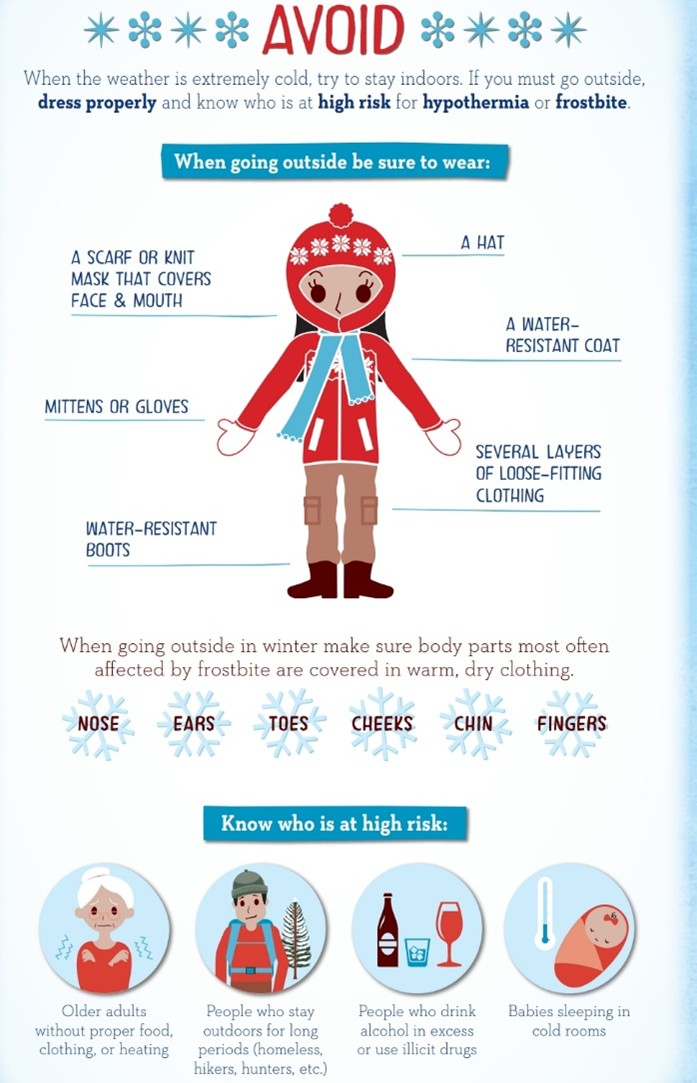
  • Frostbite occurs mostly on fingers, toes, ears, noses, and cheeks. The affected area becomes very cold, firm, and, depending on the skin’s color, turns white, yellowish-gray, or gray.
  • Dress children in layers of warm clothing, including hats, snowpants, good mittens, and waterproof boots. If the top layer gets wet, they will still have a dry layer underneath.
  • Tuck scarves inside coats to prevent them from becoming strangulation hazards.
  • Even though it’s cold outside, it’s important to stay hydrated. Children are more likely than adults to become dehydrated.

Infographic on avoiding hypothermia and frostbite in extreme cold, showing recommended winter clothing such as hat, scarf, water-resistant coat, gloves, boots, and layered clothing. Highlights body parts prone to frostbite and lists high-risk groups including older adults, outdoor workers, people who drink alcohol excessively, and babies in cold rooms.

Frostbite Infographic: Preventing Frostbite | Winter Weather | CDC

Prepare for Power Outages and Severe Winter Weather: 

What to Do to Protect Yourself During a Power Outage | Natural Disasters | CDC

Car Seat and Vehicle Safety:

  • Car seats and winter coats don’t mix. Bulky coats can compress in a crash and create a loose car seat harness. Instead, lay the jacket or a blanket over children once you’ve safely strapped them into their car seat.
  • Never leave a vehicle running inside a garage. If you need to warm up your vehicle, remove it from the garage as soon as you start it to avoid the risk of Carbon Monoxide (CO) poisoning.

Staying Safe Indoors

Home Fire Safety:

  • Set up a 3-foot “kid-free zone” around space heaters and open fires.
  • Remember to turn portable space heaters off when leaving the room.
  • Keep anything that can burn at least three feet away from heating equipment, including portable space heaters, fireplaces, wood stoves, and furnaces.

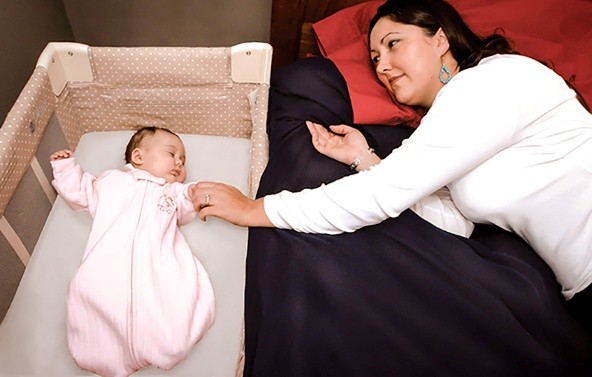
Safe Sleep:

  • A safe sleep area can help reduce the risk of sudden infant death syndrome(SIDS) and other sleep-related deaths, such as accidental suffocation.
  • To keep babies warm, dress them in a wearable blanket, also known as a sleep sack.
  • Avoid overheating and do not bundle babies
  • Keep babies’ cribs, bassinets, portable cribs, or portable play yards free of stuffed animals and blankets.
  • A firm mattress covered with a tight-fitting crib sheet is all that an infant needs to sleep safely.

Adult lying in bed next to a bedside bassinet with an infant in a pink sleep sack.

Prevent Carbon Monoxide (CO) Poisoning:

  • Each year, more than 400 Americans die from unintentional CO poisoning not linked to fires, more than 100,000 visit an emergency department, and more than 14,000 are hospitalized.
  • Vent all fuel-burning equipment to the outside to avoid carbon monoxide (CO) poisoning.
  • Install and maintain CO alarms.

Know the Signs and Symptoms of Carbon Monoxide (CO) Poisoning:

  • The most common symptoms of CO poisoning are headache, dizziness, weakness, nausea, vomiting, chest pain, and confusion.
  • People who are sleeping can die from CO poisoning before ever having symptoms.
  • If someone shows signs of having carbon monoxide poisoning, call 911 or your local Poison Control Center at 1-800-222-1222 or consult a health care professional right away. For more information, visit Carbon Monoxide Poisoning.

Credible Resources

American Red Cross: Winter Storm Preparedness & Blizzard Safety | Red Cross

Winter Storm Checklists and Fact Sheets (multiple languages):

Better Kid Care: Outdoor play on winter days — Content Areas (CKC) — Better Kid Care

Centers for Disease Control and Prevention (CDC): Site Index | Winter Weather | CDC

Child Care Weather Watch: Child Care Weather Watch

Head Start | HeadStart.gov:

HealthyChildren.org – From the American Academy of Pediatrics

Iowa State University Extension and Outreach:

National Centers for Environmental Information (NOAA/NCEI):

National Weather Service (NOAA): Winter

PA Department of Health: nws-resources.pdf

Ready.gov: Winter Weather | Ready.gov

Safe to Sleep: Homepage | Safe to Sleep

Infographic titled ‘Health Trends in Early Childhood – January 2026’ with tips for staying safe in wintertime. Sections include Trend, Explanation, Impact, and Action, advising on power grid issues, cold weather safety, bundling up, and preparing for outages. Resources listed at the bottom include links to winter storm preparedness and child safety.
Health Trends in Early Childhood

Staying Safe in Wintertime | January 2026

About Child Trends in Early Childhood

Welcome to Health Trends in Early Childhood, the monthly release from The Pennsylvania Key, focused on trending health issues related to children birth to age five and their families and caregivers.

Each month, find information about a recent health trend, learn why it is important, discover the impact it has on children, their families and caregivers, and the community, as well as actions we all can take to ensure the health and well-being of children in our communities. Also, find reliable resources to learn more about the issue.

Learn More

Disclaimer: This is the most updated information at release time. The information in Health Trends is not a Pennsylvania regulatory requirement for early childhood providers. Pennsylvania early childhood providers with regulatory requirements should contact their Cert rep or the Bureau of Certification.