 Created in 2007 by the Pennsylvania Office of Child Development and Early Learning (OCDEL), The Pennsylvania Key implements the work and supports the policies developed and managed by OCDEL. Learn More. >
Created in 2007 by the Pennsylvania Office of Child Development and Early Learning (OCDEL), The Pennsylvania Key implements the work and supports the policies developed and managed by OCDEL. Learn More. >
Created in 2007 by the Pennsylvania Office of Child Development and Early Learning (OCDEL), The Pennsylvania Key implements the work and supports the policies developed and managed by OCDEL. Learn More. >From the Pennsylvania Department of Health, Bureau of Epidemiology: Measles is a very contagious virus that spreads through the air when an infected person coughs or sneezes. Cases have been reported in Pennsylvania, so child care operators should remain alert.
Access the resources on measles for child care operators and parents or guardians at Measles Update: Resources for Child Care Providers.
Confluence Podcast Episode #9 – Facility File Requirement Fundamentals: Understanding What’s Required and Why
Provider tip sheets can be found at the bottom of the Child Care Regulations page of the Commonwealth’s website
Confluence Podcast Episode #10 – Putting Our Eyes on Supervision: It’s Essential
Confluence Podcast Episode #11 – Getting to Know OCDEL’s Bureau Directors, Because Connection is Key to Our Work!
If your smoke detector is on one of the lists of those recalled (below), you must purchase a new one to replace it. Retain proof of purchase for an interconnected alarm.
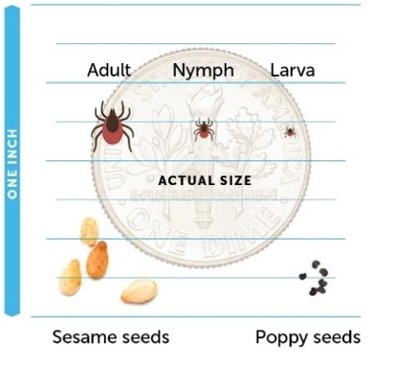 A tick is an arthropod, like a spider. Ticks have 8 legs, are very small, and attach to a person or animal to suck blood. In Pennsylvania, many ticks carry diseases. Ticks can be found anywhere: outdoors in areas with long grasses and weeds, leaf piles, the woods, and even in your own yard. [Reference: health.pa.gov/ticks]
It is important to remove a tick as soon as the tick is found embedded in the skin. The longer time a tick is attached to a child or adult increases the risk of Lyme disease transmission.
How to remove a tick
If the tick’s head breaks off in the skin during removal
After you’ve removed a tick, it’s important to:
Tick bite symptoms
Tick bites normally don’t itch or hurt. That’s often why they may not be noticed. If the tick transferred a disease, a rash will occur. It will appear in the next 2 to 4 weeks.
Contact a healthcare provider if:
Prevention of tick bites
Perform daily tick checks after outdoor play and encourage families to check again at home. Use light clothing so ticks can be spotted, tuck socks into pants, avoid tall grass, and stay on clear paths outdoors.
PA Department of Health Resources
A child care operator needs to use their best judgment on what they think they are capable of, with the child’s safety coming first. The parent should be notified at the time of discovery of an embedded tick. The child care operator can work with the parent to determine removal or next steps. (As a reminder, an incident report must be completed and provided to the parent on the day of the incident.)
It is recommended that a tick is removed by the child care provider, the parent, or by a medical professional as soon as possible on the day of discovery.
Childcare operators may request a FREE tick puller from the Pennsylvania Department of Health by reaching out to RA-RA-DHVBDmaterials@pa.gov.
In this video you will review the regulatory requirements surrounding water activity as outlined under 55 Pa. Code §§ 3270.115, 3280.115, and 3290.115. This vodcast does not satisfy the requirements for water safety instruction outlined in 55 Pa. Code §§ 3270.115(a)(8), 3280.115(a)(8), and 3290.115(a)(8).