 Created in 2007 by the Pennsylvania Office of Child Development and Early Learning (OCDEL), The Pennsylvania Key implements the work and supports the policies developed and managed by OCDEL. Learn More. >
Created in 2007 by the Pennsylvania Office of Child Development and Early Learning (OCDEL), The Pennsylvania Key implements the work and supports the policies developed and managed by OCDEL. Learn More. >
Created in 2007 by the Pennsylvania Office of Child Development and Early Learning (OCDEL), The Pennsylvania Key implements the work and supports the policies developed and managed by OCDEL. Learn More. >Health literacy impacts everyone. Health literacy is the ability to find, understand, evaluate, communicate, and use health information to make informed decisions and good choices about your health.
Health literacy is a stronger predictor of individual health status than age, income, employment status, or education level.
Health literacy begins early in life. Promoting young children’s health through health promotion activities is an investment for the future. Exploring young children’s health literacy is essential to be able to plan activities which promote health and are embedded into early childhood education.
Studies show that children at the age of four are health-conscious and can recognize basic health concepts; they are able to take an active role in their health. Picture-based messages or story-based messages supported by illustrations can help support the formation of health literacy in early childhood.
Health Literacy research reveals that 4-year-old children, given the opportunity to speak for themselves, interpreted health messages in a different way than the intended meaning of the illustrations developed by adults. This study supports the view that 4-year-old children can take an active role in their health and are capable of making health information meaningful: Health Literacy in Early Childhood: A Systematic Review of Empirical Studies.
Health literacy is a central focus of Healthy People 2030. Achieving improved health for all and attaining personal health literacy is one of Healthy People 2030’s goals:
Family health literacy matters! When families use health literacy to improve their health, they build healthy habits together and set the foundation for a lifetime of well-being. Family health literacy means:
Accessing trustworthy health information is key to health literacy.
Most people get their health information on social media, so it is important to identify health influencers who deliver clear, evidence-based information directly on social media platforms.
Find a Starter Guide to Trustworthy Medical Evidence at The Evidence Collective: Recommendations — The Evidence Collective

Explore health literacy with young children:
Empower young children to make healthy choices:
Support STEM – Science, Engineering, Technology and Medicine
“We need to get kids interested in STEM — science, engineering, technology and medicine. We’re bringing these topics to kids to get them interested at an early age and inspire that passion.” Dr. Angela Mattke, a pediatrician with Mayo Clinic’s Children’s Center, Mayo Clinic Minute: Boosting kids’ health literacy – Mayo Clinic News Network
Celebrate National Literacy Month!
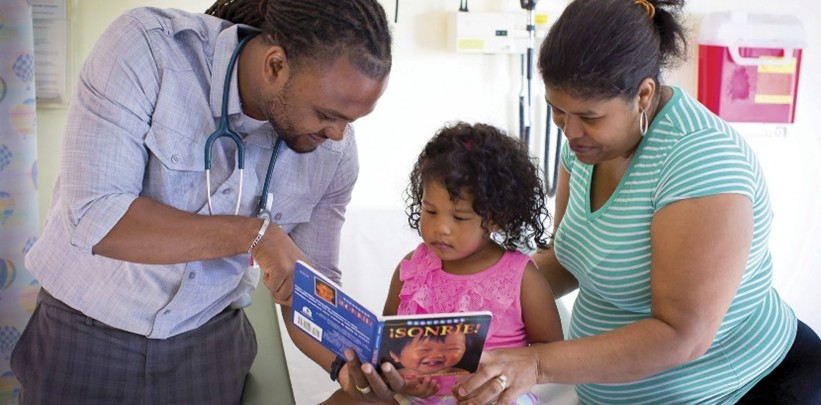


Children’s Book about Oral Health
Children’s Stories About Families Without Homes (PA Promise for Children)
Happily Ever Elephants (curated book lists from former elementary school librarian)
Music, Movement and Literacy for Young Children (Angela Russ-Ayon)
Toddler – Preschool Songs & Books | AbridgeClub.com | Interactive
Office of Head Start
Using Health Literacy to Improve My Family’s Health | HeadStart.gov
Sesame Workshop – Health Resources
The SPACES Book – A Book about Emotions, by Omari Baye
Winter M, Willy AJ, Ingersoll J, Meyer MJ, Clabough EBD (2026) Keep the bedtime story: A daily reading ritual improves empathy and creativity in children. PLoS One 21(1): e0340068. Keep the bedtime story: A daily reading ritual improves empathy and creativity in children | PLOS One
Health Literacy in Early Childhood: A Systematic Review of Empirical Studies
Bánfai-Csonka, H.; Betlehem, J.; Deutsch, K.; Derzsi-Horváth, M.; Bánfai, B.; Fináncz, J.; Podráczky, J.; Csima, M. Health Literacy in Early Childhood: A Systematic Review of Empirical Studies. Children 2022, 9(8), 1131; Health Literacy in Early Childhood: A Systematic Review of Empirical Studies | MDPI
Derwig, M.; Tiberg, I.; Hallström, I. Elucidating the child’s perspective in health promotion: Children’s experiences of child-centred health dialogue in Sweden. Health Promotion International, Volume 36, Issue 2, April 2021, Pages 363–373.
Supporting children’s health literacy development: A systematized review of the literature
Fleary, S.A., Joseph, P.L., Ali, Z. (2024). Children and Adolescents’ Health Literacy in the United States of America. In: Nash, R., Cruickshank, V., Elmer, S. (eds) Global Perspectives on Children’s Health Literacy. Springer, Cham.
Children and Adolescents’ Health Literacy in the United States of America | Springer Nature Link
Navarro Rubio MD, Blay C, 2023. Health Literacy in Children and Adolescents. A Review of the State of the Art, Medical Research Archives, [online] 11(6). (PDF) Health Literacy in Children and Adolescents: A Review of the State of the Art
Disclaimer: This is the most updated information at release time. The information in Health Trends is not a Pennsylvania regulatory requirement for early childhood providers. Pennsylvania early childhood providers with regulatory requirements should contact their Cert rep or the Bureau of Certification.