 Created in 2007 by the Pennsylvania Office of Child Development and Early Learning (OCDEL), The Pennsylvania Key implements the work and supports the policies developed and managed by OCDEL. Learn More. >
Created in 2007 by the Pennsylvania Office of Child Development and Early Learning (OCDEL), The Pennsylvania Key implements the work and supports the policies developed and managed by OCDEL. Learn More. >
Created in 2007 by the Pennsylvania Office of Child Development and Early Learning (OCDEL), The Pennsylvania Key implements the work and supports the policies developed and managed by OCDEL. Learn More. >Impacts of Healthy Behaviors on Health Outcomes
Prenatal (Before and During Pregnancy)
|
Healthy Behavior |
Associated Health Outcomes |
|
Balanced nutrition (adequate folate, iron, calcium, iodine, protein) |
Reduced risk of birth defects, low birth weight, preterm birth, maternal anemia, and developmental problems. Maternal nutrition | UNICEF; pmc.ncbi.nlm.nih.gov |
|
Regular prenatal care |
Earlier detection and management of pregnancy complications; improved maternal and infant survival. Maternal health |
|
Avoidance of tobacco, alcohol, and drugs |
Reduced risk of miscarriage, stillbirth, birth defects, low birth weight, and developmental disorders. Substance Use During Pregnancy | Maternal Infant Health | CDC; Smoking, Pregnancy, and Babies | Overviews of Diseases/Conditions | Tips From Former Smokers | CDC |
|
Stress management and social support |
Better maternal mental health and improved infant outcomes. Maternal health |
Stress Management Can Improve Birth Outcomes: While stress management cannot eliminate all pregnancy risks, it can be an important protective factor and help pregnant individuals maintain healthy behaviors and engage consistently in prenatal care.
Postnatal (After Birth)
|
Healthy Behavior |
Associated Health Outcomes |
|
Maternal postpartum care and mental health support |
Improved recovery, parent-child bonding, and family well-being. Maternal health |
|
Breastfeeding |
Improved infant immunity, lower risk of infections, obesity, diabetes, and SIDS; lower maternal risk of breast and ovarian cancer. Breastfeeding; Breastfeeding Benefits Both Baby and Mom | Breastfeeding | CDC |
|
Well-child visits and immunizations |
Prevention of infectious diseases and early identification of developmental concerns. About Learn the Signs. Act Early. | Learn the Signs. Act Early. | CDC |
Impacts of Comprehensive Services in Early Childhood Education
Early childhood development and education are key determinants of future health and well-being. Early Childhood Development and Education – Healthy People 2030 | odphp.health.gov
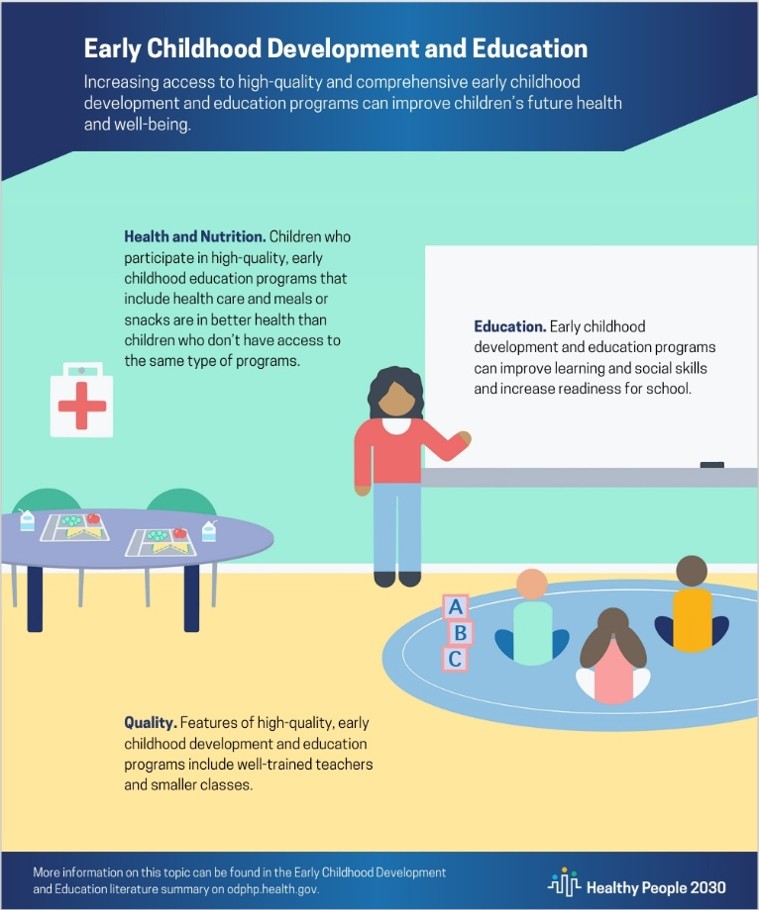
Social Determinants of Health: Center-Based Early Childhood Education
High-quality early childhood education prepares children for school and improves physical health, mental health, developmental outcomes, and lifelong well-being, especially for children facing social or economic disadvantages.
Children in high-quality programs learn social-emotional skills which help reduce behavioral challenges and support positive mental health throughout childhood and adolescence.
Early childhood development and educational opportunities are affected by various environmental and social factors, including early life stress, socioeconomic status, relationships with parents and caregivers, and access to early education programs. The Foundations of Lifelong Health
Social Determinants of Health
Social determinants of health (SDOH) are the conditions in the environments where people are born, live, learn, work, and play, which affect a wide range of health and quality-of-life outcomes and risks.
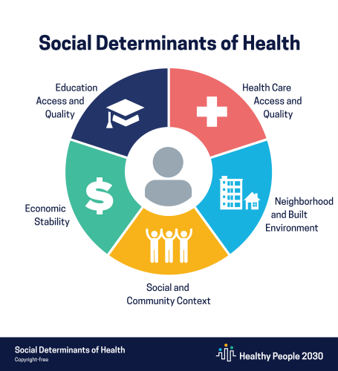
Healthy People 2030, U.S. Department of Health and Human Services, Office of Disease Prevention and Health Promotion. Retrieved 9.18.26 from Healthy People 2030
Healthy People 2030 highlights the impact of safe housing, access to nutritious foods and physical health opportunities, transportation, and neighborhoods; polluted air and water: Social Determinants of Health – Healthy People 2030 | odphp.health.gov
Establish practices for lifelong healthy behaviors:
Prioritize play!
Assist families in connecting with food and nutrition resources:
Assist families in connecting to quality early learning, health, and social services:
American Academy of Pediatrics: Healthy Children Articles:
Center on the Developing Child at Harvard University: The Foundations of Lifelong Health
Nature-Based Play – keystonekidsgo.org
World Health Organization (WHO): Maternal nutrition | UNICEF
Zero to Three: Infant Physical Health & Nutrition: Promoting Healthy Growth
American Journal of Obstetrics and Gynecology. Author manuscript; available in PMC: 2022 Jun 9. Published in final edited form as: Am J Obstet Gynecol. 2021 Dec 27;226(5):607–632. doi: 10.1016/j.ajog.2021.12.035
Anderson, L. M., Shinn, C., Fullilove, M. T., Scrimshaw, S. C., Fielding, J. E., Normand, J., … & Task Force on Community Preventive Services. (2003). The effectiveness of early childhood development programs: A systematic review. American Journal of Preventive Medicine, 24(3), 32–46.
Apostolopoulou, A.; Tranidou, A.; Tsakiridis, I.; Magriplis, E.; Dagklis, T.; Chourdakis, M. Effects of Nutrition on Maternal Health, Fetal Development, and Perinatal Outcomes. Nutrients. 2024 Jan 27;16(3):375. doi: 10.3390/nu16030375
Campbell, F., Conti, G., Heckman, J. J., Moon, S. H., Pinto, R., Pungello, E., & Pan, Y. (2014). Early childhood investments substantially boost adult health. Science, 343(6178), 1478–1485.
Muennig, P., Robertson, D., Johnson, G., Campbell, F., Pungello, E. P., & Neidell, M. (2011). The effect of an early education program on adult health: The Carolina Abecedarian Project randomized controlled trial. American Journal of Public Health, 101(3), 512–516.
NICHD Early Child Care Research Network. (2002). Child-care structure→ process→ outcome: Direct and indirect effects of child-care quality on young children’s development. Psychological Science, 13(3), 199–206.
Nutrients. Effects of Nutrition on Maternal Health, Fetal Development, and Perinatal Outcomes – PMC. 2024 Jan 27;16(3):375. doi: 10.3390/nu16030375:
Prepregnancy Diet Quality Index and Adverse Pregnancy Outcomes. Ummayhany Bharmal, MBBS1; George Saade, MD2; Philip Greenland, MD3 et al. AMA Netw Open. Published Online: September 10, 2026. doi:10.1001/jamanetworkopen.2026.33245
Disclaimer: This is the most updated information at release time. The information in Health Trends is not a Pennsylvania regulatory requirement for early childhood providers. Pennsylvania early childhood providers with regulatory requirements should contact their Cert rep or the Bureau of Certification.