 Created in 2007 by the Pennsylvania Office of Child Development and Early Learning (OCDEL), The Pennsylvania Key implements the work and supports the policies developed and managed by OCDEL. Learn More. >
Created in 2007 by the Pennsylvania Office of Child Development and Early Learning (OCDEL), The Pennsylvania Key implements the work and supports the policies developed and managed by OCDEL. Learn More. >
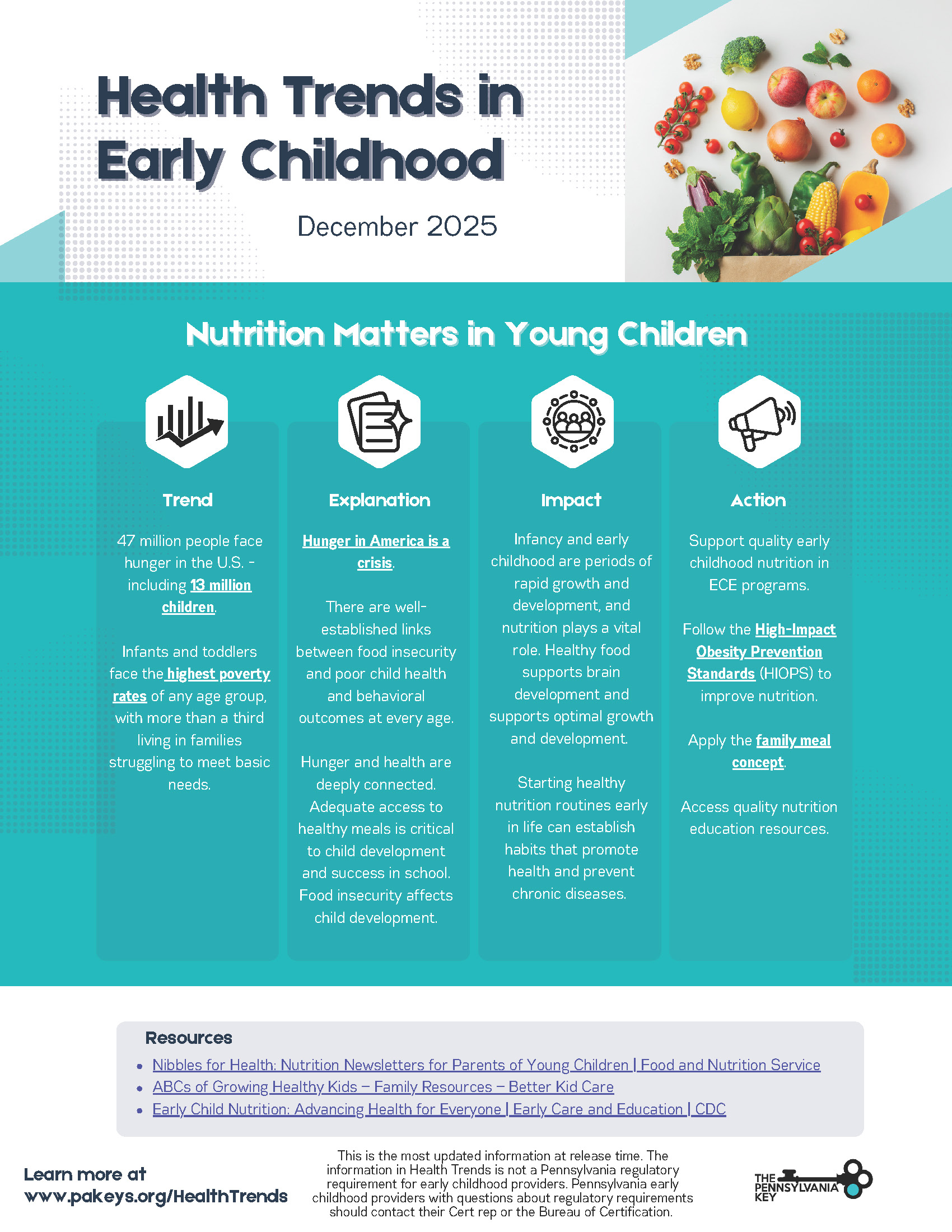
Created in 2007 by the Pennsylvania Office of Child Development and Early Learning (OCDEL), The Pennsylvania Key implements the work and supports the policies developed and managed by OCDEL. Learn More. >Hunger in America is a crisis. In September 2025, the US Department of Agriculture announced it would no longer collect food insecurity data through the Household Food Insecurity Reports, ending nearly 30 years of annual, national tracking.
Food security (access by all people at all times to enough food for an active, healthy life) is one of several conditions necessary for a population to be healthy and well nourished. There are well-established links between food insecurity and poor child health and behavioral outcomes at every age, underscoring the economic and social imperative to address this issue.
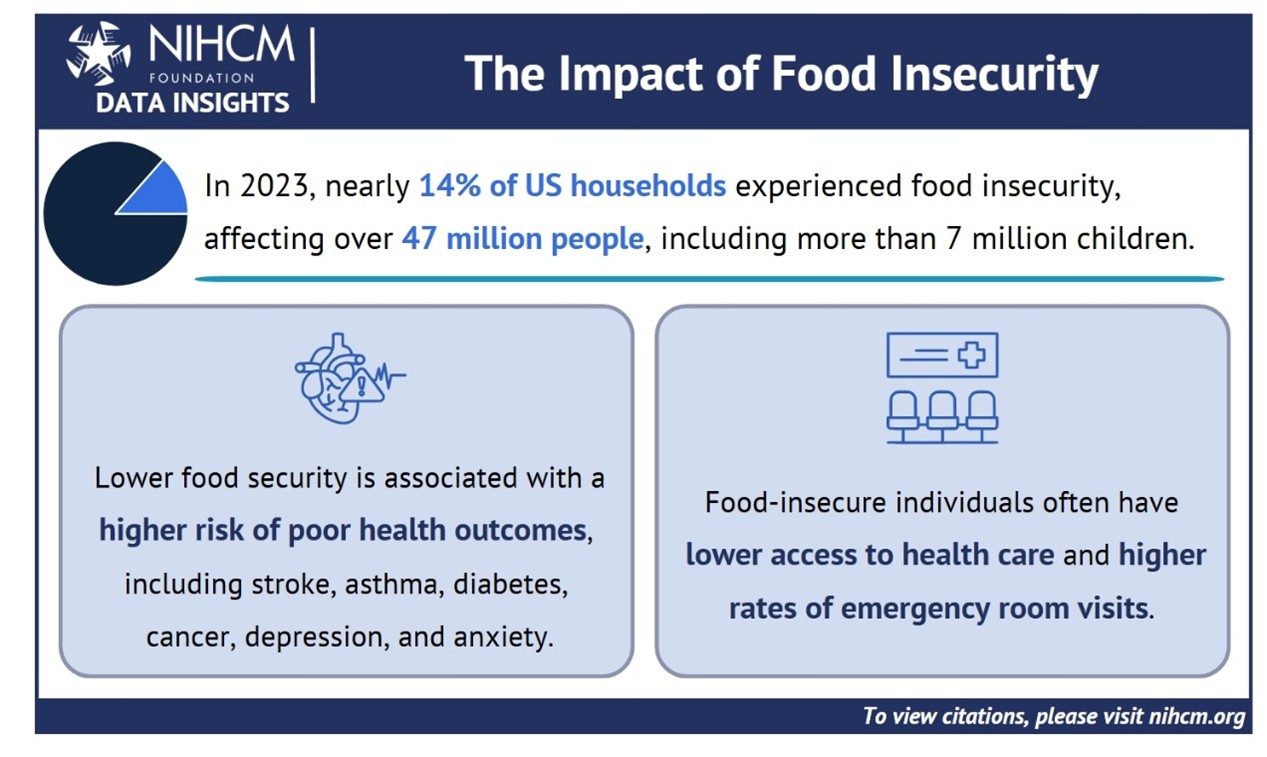
Hunger and health are deeply connected. Adequate access to healthy meals is critical to child development and success in school. Food insecurity affects child development.
The effects of chronic hunger are profound. Those effects include increased risks for chronic diseases, higher chances of hospitalization, poorer overall health, and increased health care costs.
Eating healthy, nutritious meals is vital to a child’s physical, mental social and academic development. Decades of research has linked child food insecurity to a number of negative health outcomes and even lifelong consequences.
Children in food-insecure homes are more likely to have:
Infancy and early childhood are periods of rapid growth and development, and nutrition plays a vital role. Healthy food supports brain development and supports optimal growth and development.
Starting healthy nutrition routines early in life can establish habits that promote health and prevent chronic diseases. Policies and practices where children and caregivers spend time in early learning settings can affect these decisions.
Early feeding decisions, such as breastfeeding, timing of solid food introduction, and what foods and drinks are provided, play a critical role in early childhood. CDC’s Early Childhood Nutrition Report 2025
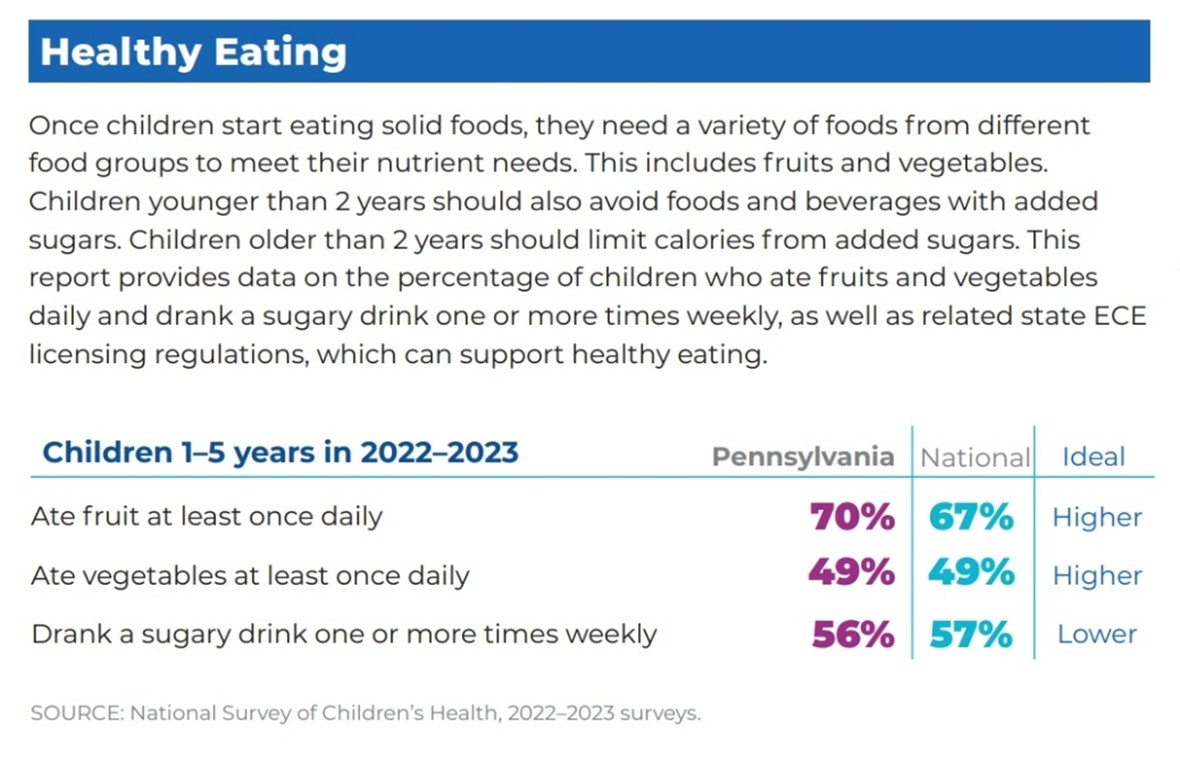
Knowing what and how to feed children in infancy through the early years is important for families and caregivers as they help establish healthy habits that will carry through until adulthood.
Support quality early childhood nutrition in ECE programs:
Follow the “High-Impact Obesity Prevention Standards (HIOPS)” to improve nutrition: High-Impact Obesity Prevention Standards
Apply the family meal concept: Family Mealtimes – PA Promise for Children
Access quality nutrition education resources:
Food Insecurity and Child Health. Pediatrics (2019) 144 (4): e20190397 https://doi.org/10.1542/peds.2019-0397
Household Food Security in the United States in 2023. Economic Research Service, September 2024. Matthew P. Rabbitt, Madeline Reed-Jones, Laura J. Hales, and Michael P. Burke. www.ers.usda.gov
Nutrition in Pediatric Patients and Vulnerable Populations: Updates and Advances Children 2024, 11(4), 430; https://doi.org/10.3390/children11040430
Pennsylvania Partnerships for Children Report: State of Children’s Health Insurance in Pennsylvania – November 2025 – PA Partnerships for Children
US Census Bureau “Poverty in the United States: 2024,” September 2025: Poverty in the United States: 2024
ZERO TO THREE analysis of data from the Current Population Survey Annual Social and Economic Supplement (ASEC): Annual Social and Economic Supplements
Disclaimer: This is the most updated information at release time. The information in Health Trends is not a Pennsylvania regulatory requirement for early childhood providers. Pennsylvania early childhood providers with regulatory requirements should contact their Cert rep or the Bureau of Certification.