 Created in 2007 by the Pennsylvania Office of Child Development and Early Learning (OCDEL), The Pennsylvania Key implements the work and supports the policies developed and managed by OCDEL. Learn More. >
Created in 2007 by the Pennsylvania Office of Child Development and Early Learning (OCDEL), The Pennsylvania Key implements the work and supports the policies developed and managed by OCDEL. Learn More. >
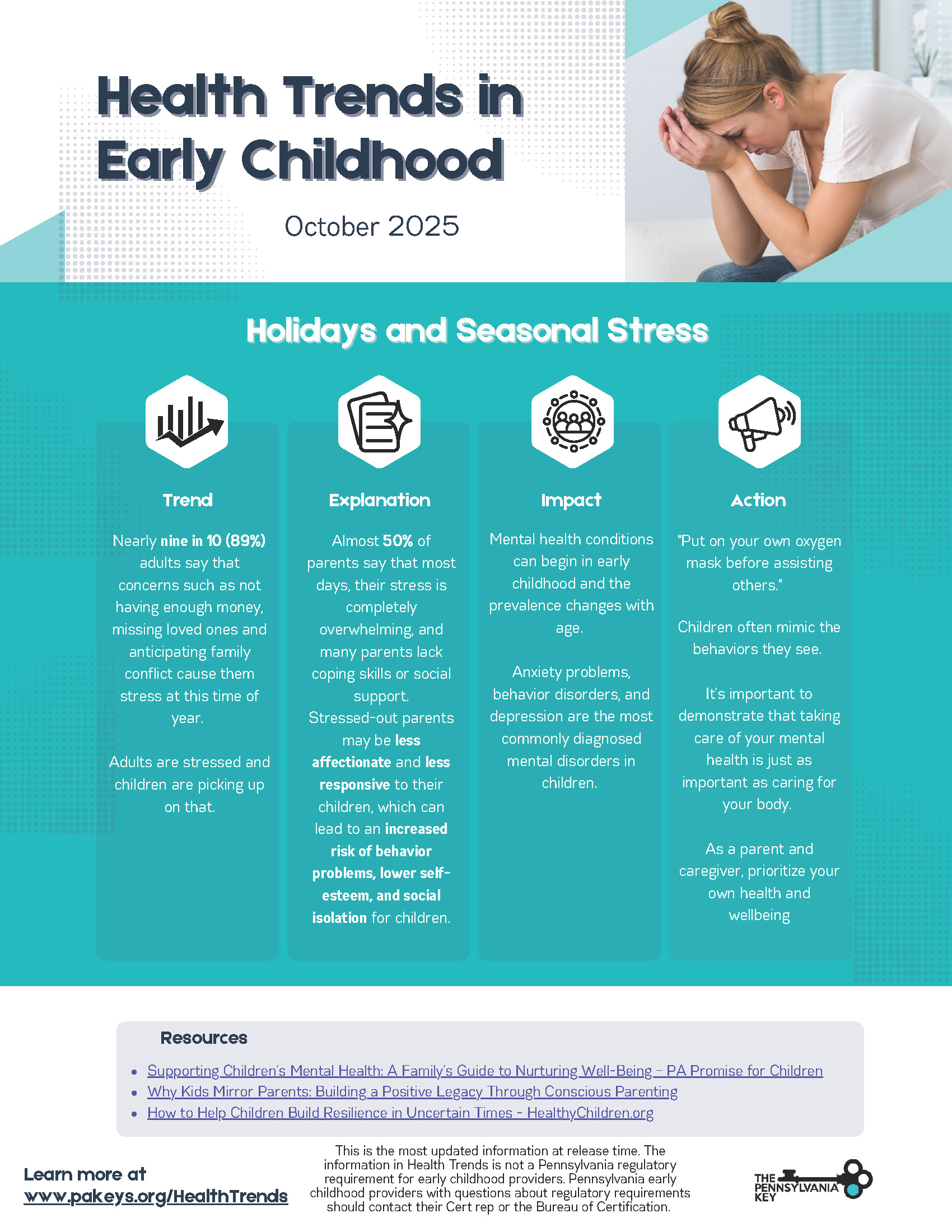
Created in 2007 by the Pennsylvania Office of Child Development and Early Learning (OCDEL), The Pennsylvania Key implements the work and supports the policies developed and managed by OCDEL. Learn More. >In 2024, the U.S. Surgeon General’s report Parents Under Pressure outlined the mental health crisis among parents, sharing that almost 50% of parents say that most days, their stress is completely overwhelming, and many parents lack coping skills or social support. Stressed-out parents may be less affectionate and less responsive to their children, which can lead to an increased risk of behavior problems, lower self-esteem, and social isolation for children.
Infographic from the American Psychological Association (APA, 2023):
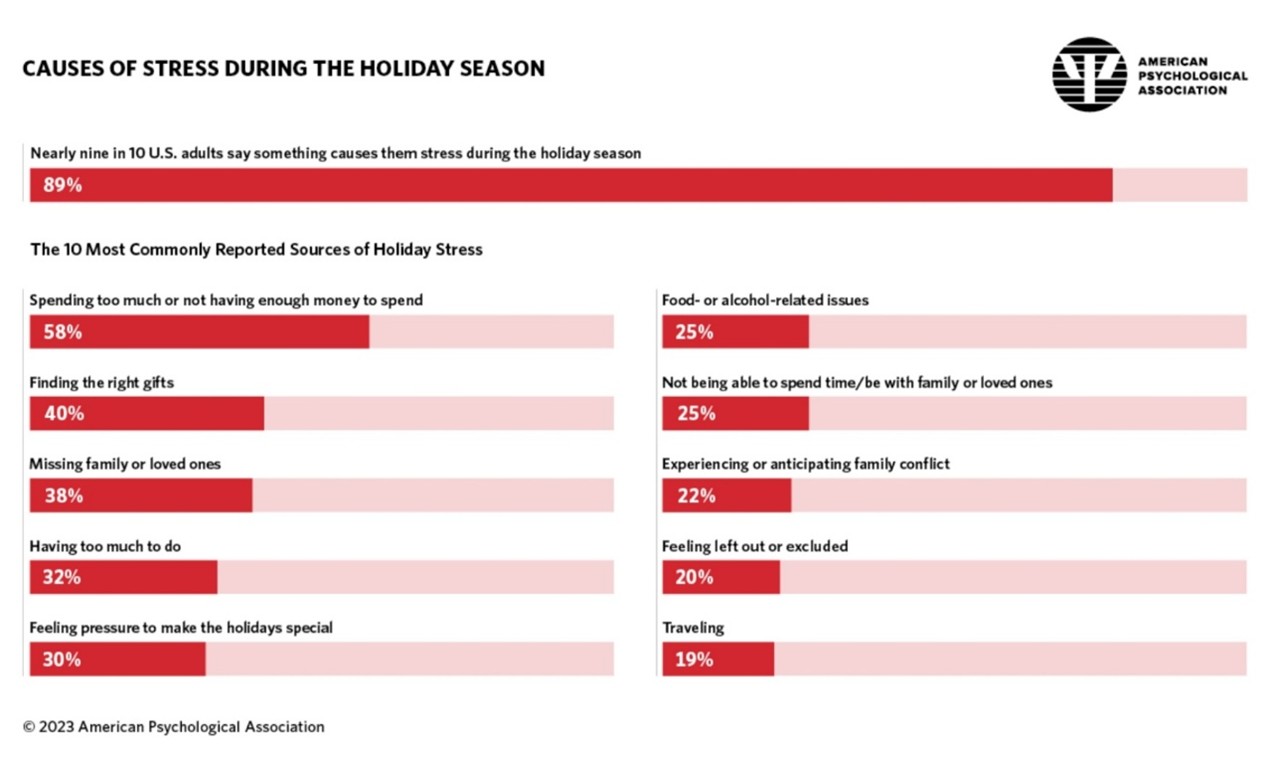
2023 APA Survey Methodology:
This survey was conducted online within the United States by The Harris Poll on behalf of APA from Nov. 14–16, 2023, among 2,061 adults ages 18 and older. The sampling precision of Harris online polls is measured by using a Bayesian credible interval. For this study, the sample data is accurate to within + 2.7 percentage points using a 95% confidence level.
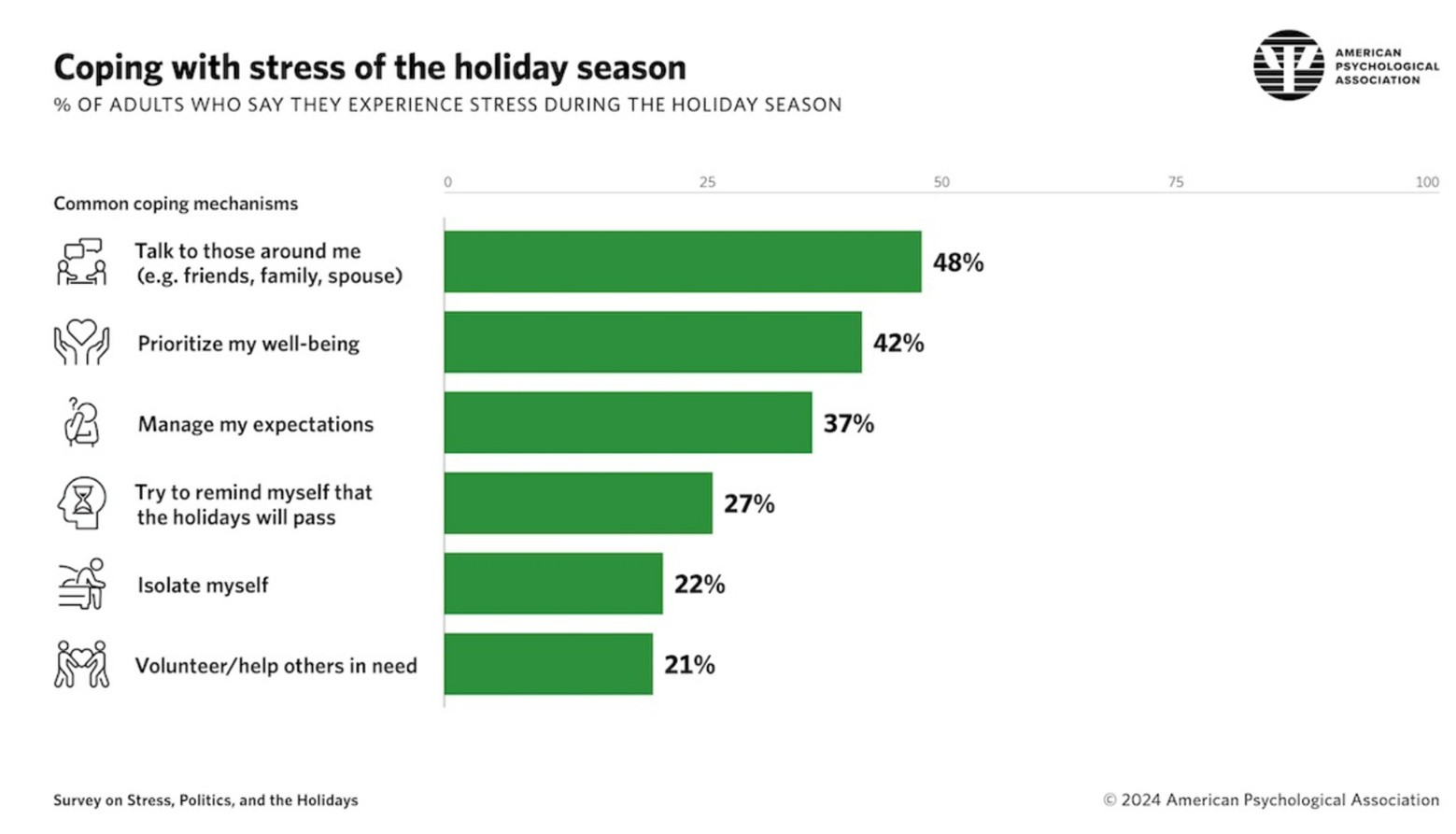
Infographic from APA’s 2024 Survey on Stress, Politics, and the Holidays:
Stress during the holiday season can impact the wellbeing and mental health of parents and caregivers of young children. This is the time to offer more emotional support for parents, caregivers, and families.
“Put on your own oxygen mask before assisting others.”
Model Positive Mental Health Behaviors
Children often mimic the behaviors they see. When they observe adults managing stress in healthy ways—through exercise, relaxation techniques, or simply taking time for themselves—they are more likely to adopt similar coping strategies. It’s important to demonstrate that taking care of your mental health is just as important as caring for your body.
Supportive strategies for families, caregivers and children during stressful times
If you or someone you know is struggling or in crisis, confidential, free, 24/7/365 help is available.
NOTE: The 988 line automatically routes calls by your phone’s area code to the nearest crisis center.
Access PDF: Parents Under Pressure
Disclaimer: This is the most updated information at release time. The information in Health Trends is not a Pennsylvania regulatory requirement for early childhood providers. Pennsylvania early childhood providers with regulatory requirements should contact their Cert rep or the Bureau of Certification.