 Created in 2007 by the Pennsylvania Office of Child Development and Early Learning (OCDEL), The Pennsylvania Key implements the work and supports the policies developed and managed by OCDEL. Learn More. >
Created in 2007 by the Pennsylvania Office of Child Development and Early Learning (OCDEL), The Pennsylvania Key implements the work and supports the policies developed and managed by OCDEL. Learn More. >
Created in 2007 by the Pennsylvania Office of Child Development and Early Learning (OCDEL), The Pennsylvania Key implements the work and supports the policies developed and managed by OCDEL. Learn More. >Background on Foodborne Illnesses
Each year, roughly 48 million or one in six Americans (16.7%) get food poisoning (also called foodborne illness) after eating contaminated food. Foodborne illnesses occur when viruses, bacteria and parasites, or toxins (poisons) produced by them, get into the foods we eat (e.g. Listeria, Salmonella, Cyclospora, Shigella, STEC, Vibrio, Yersinia, and others).
What is Cyclosporiasis?
Cyclosporiasis is an infection of the intestines caused by the parasite Cyclospora cayetanensis, when a person eats food or water contaminated with feces containing Cyclospora. See Cyclosporiasis in Children: Symptoms, Treatment & Prevention – HealthyChildren.org
Infographic Caption
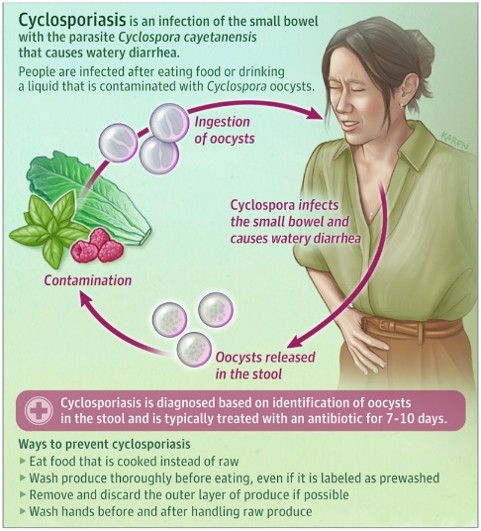
This infographic explains how cyclosporiasis spreads and how infection can be prevented. Cyclosporiasis is an infection of the small bowel caused by the parasite Cyclospora cayetanensis, which can cause watery diarrhea. People become infected by eating food or drinking liquids contaminated with Cyclospora oocysts.
A circular diagram shows the transmission cycle: contaminated produce, such as leafy greens and berries, contains oocysts; people ingest the oocysts through contaminated food or beverages; the parasite infects the small bowel and causes watery diarrhea; and oocysts are released in stool, which can lead to further contamination and continue the cycle.
The infographic states that cyclosporiasis is diagnosed by identifying oocysts in stool and is typically treated with an antibiotic for 7–10 days.
Prevention measures include eating cooked rather than raw foods, thoroughly washing produce before eating, removing and discarding outer layers of produce when possible, and washing hands before and after handling raw produce.
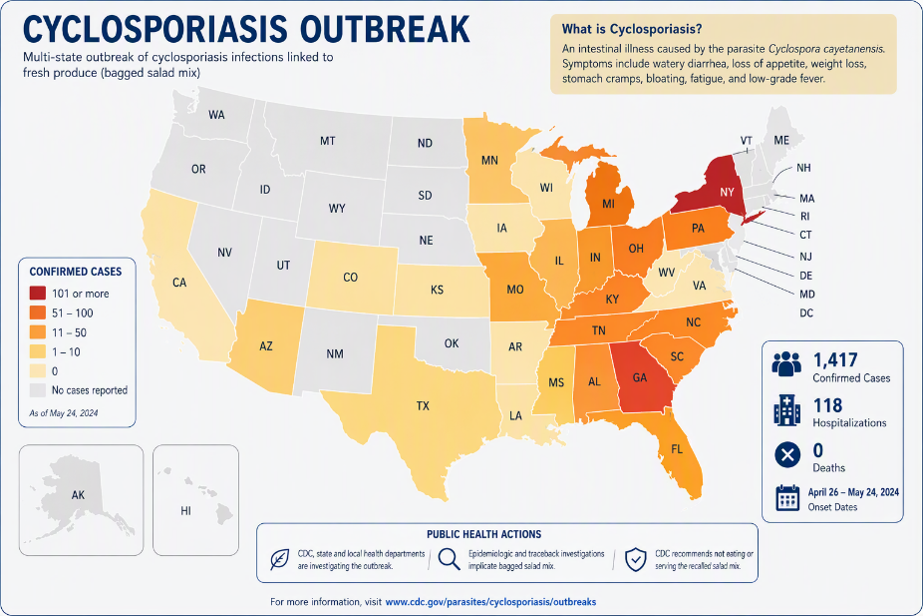
Cyclosporiasis Outbreak (as of July 28, 2026)
FDA is actively investigating six outbreaks. (identified through genetic testing). States are tallying over 14,000 suspected Cyclosporiasis cases, compared to previous years, when ~ 3,500 cases were the norm.
NOTE: The true number of people sick with cyclosporiasis is likely higher than the number reported. This is because some people recover without medical care and are not tested for Cyclospora.
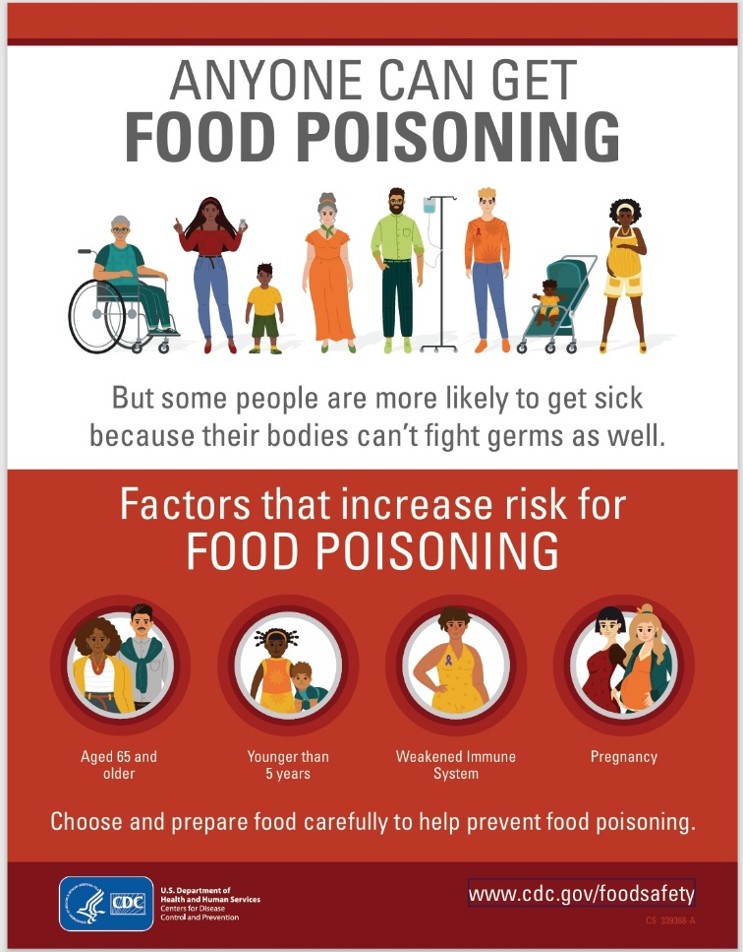
Anyone can get food poisoning, but children are more likely to be affected and have more serious illness.
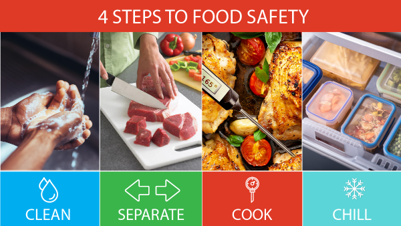
Preventing Food Poisoning
Educational Materials and Videos | Food Safety | CDC
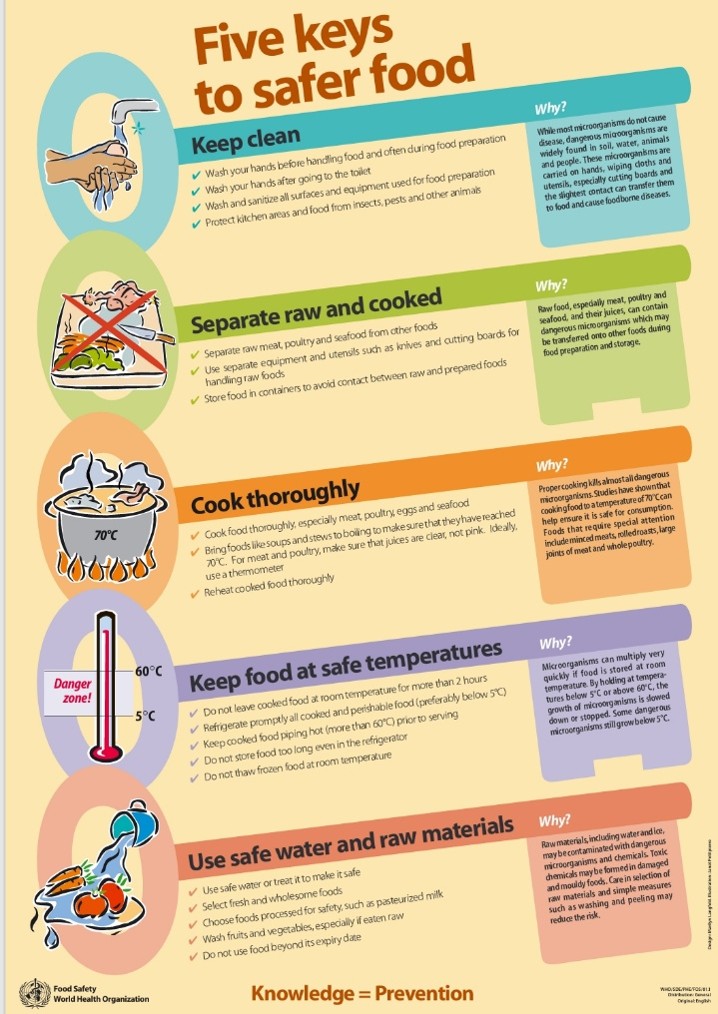
Five Keys to Safer Food: Five keys to safer food – Poster (translated into 88 languages available online)
What to do if your child has food poisoning:
American Academy of Pediatrics: Healthy Children
Centers for Disease Control and Prevention (CDC):
Center for Infectious Disease Research and Policy (CIDRAP) – University of Minnesota
Food Safety Magazine – Join Free
Food Safety News (FSN)
PA Department of Health
The Evidence Collective (Substack)
U.S. Food & Drug Administration (FDA):
U.S. PIRG: How to find out about food recalls
World Health Organization (WHO): Food safety
Your Local Epidemiologist (YLE): Home | Your Local Epidemiologist
Disclaimer: This is the most updated information at release time. The information in Health Trends is not a Pennsylvania regulatory requirement for early childhood providers. Pennsylvania early childhood providers with regulatory requirements should contact their Cert rep or the Bureau of Certification.