
Researchers are challenging the traditional view of human infant helplessness as a mere biological weakness. In a new paper, researchers argue that the unique combination of a highly developed sensory system (precocial) and a severely limited motor system (altricial) is a key driver of human nature. https://neurosciencenews.com/evolutionary-infant-helplessness-social-30376/
From Resources to Routines: The Importance of Stability in the Developmental Environment
Beginning before birth, children’s health and development are shaped by interconnected influences in their developmental environment; the full range of experiences and exposures in the places where they live, grow, play, and learn. A new working paper from the Early Childhood Scientific Council on Equity and the Environment (ECSCEE), From Resources to Routines: The Importance of Stability in the Developmental Environment, explores the many ways that stability—or the lack of it—can shape children’s developmental environments, with profound impacts on their health and well-being in the moment and across the lifespan. The paper offers strategies for policymakers, community leaders, service providers, and others to increase stability and develop more resilient systems. https://developingchild.harvard.edu/resources/working-paper/importance-of-stability-in-developmental-environment/
Beginning before birth, children’s health and development are shaped by interconnected influences in their developmental environment; the full range of experiences and exposures in the places where they live, grow, play, and learn. A new working paper from the Early Childhood Scientific Council on Equity and the Environment (ECSCEE), From Resources to Routines: The Importance of Stability in the Developmental Environment, explores the many ways that stability—or the lack of it—can shape children’s developmental environments, with profound impacts on their health and well-being in the moment and across the lifespan. The paper offers strategies for policymakers, community leaders, service providers, and others to increase stability and develop more resilient systems. https://developingchild.harvard.edu/resources/working-paper/importance-of-stability-in-developmental-environment/
Helping children navigate adversity, trauma, and even tragedy can empower them to adapt and thrive. Key tips include encouraging them to accept change, build connections with peers, and foster a positive self-image. In a world filled with uncertainty, we can teach kids the skills they need to bounce back stronger. 💪
For a helpful guide on building resilience, check out the American Psychological Association’s Resilience Guide for Parents and Teachers. https://ow.ly/c8h650VllE7📘
Child care professionals: iLookOut's interactive, story-based Mandated Reporter Training not only meets state requirements and can earn you 6 hours of continuing education credit (all at no cost), but it also teaches how to promote resilience in the children you care for. 🌟 Learn more at www.ilookoutpa.org.
Let’s help kids grow stronger together! 💙
✨ Now Available: April Coaching eNews ✨
In April, we’re exploring The Power of “Yes, and…”—a simple shift in language that can make a powerful difference.
When we respond with “Yes, that makes sense, but…”, the but often unintentionally cancels what came before it. Even with supportive intent, it can land as a correction or a disagreement.
💡 “Yes, and…” changes the dynamic.
It acknowledges what someone is experiencing and opens the door to new perspectives and possibilities—without erasing their thinking.
In April’s Coaching eNews, we dive into how “Yes, and…” helps us:
Honor others’ experiences
Build connection and trust
Expand conversations instead of shutting them down
➡️ Read the April Coaching eNews and explore how one small word can create more meaningful dialogue.
https://conta.cc/3Qclrk9

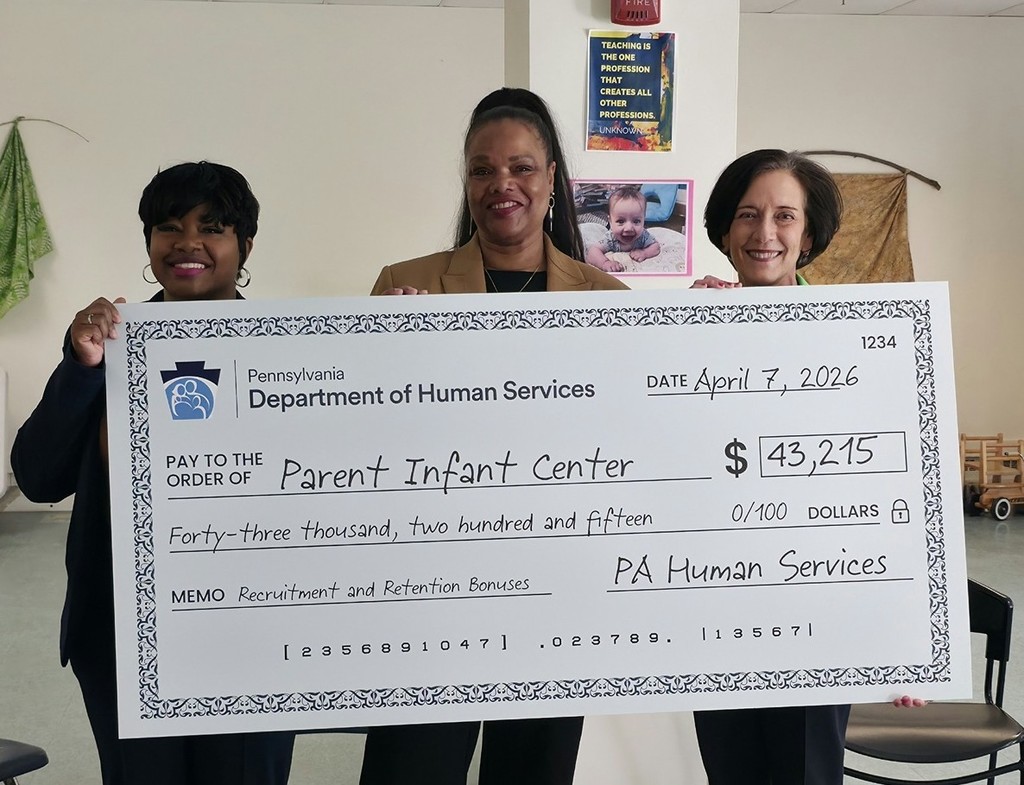
Pennsylvania Department of Human Services (DHS) Secretary Dr. Val Arkoosh recently recognized West Philadelphia’s Parent Infant Center as the recipient of the largest individual Child Care Recruitment and Retention Program bonus award created in the 2025-26 Budget. The visit highlights how Governor Josh Shapiro’s 2026-27 Budget Proposal builds on his Administration’s efforts to make child care more affordable and accessible by investing an additional $10 million in the Child Care Recruitment and Retention Program to support the child care workforce. https://www.facebook.com/PAHumanServices/posts/pfbid02pLJgnhvVtM7bWFZ3boxwpMpV6bhm29C9aWL2sDqp43jmqL5GP4mNkjcVTRi4pb6jl